Paper Bag Making Machine Buying Guide: How to Choose (2026)
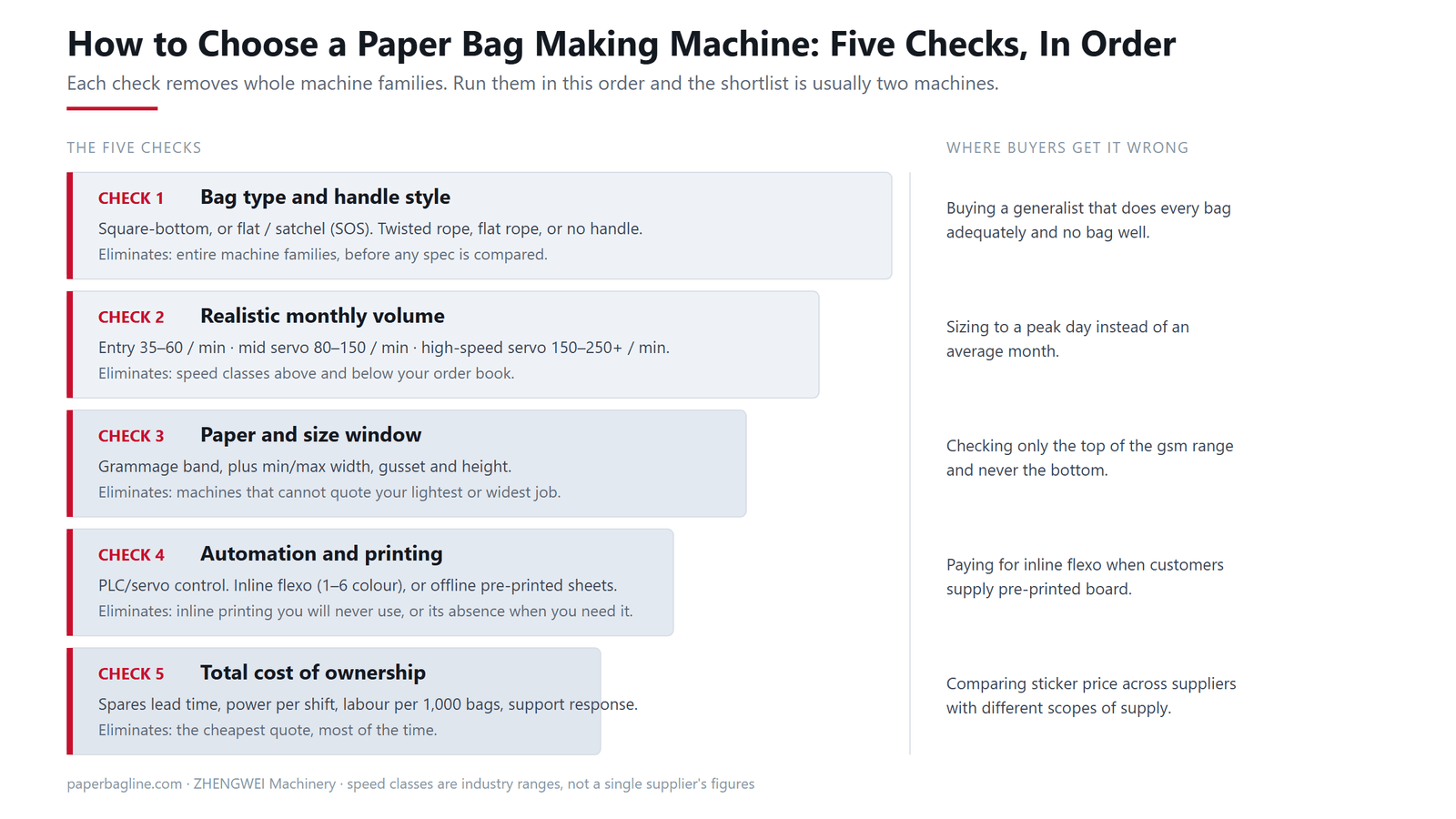
Quick answer This paper bag making machine buying guide comes down to five checks: match the machine to your bag type (square-bottom, flat, with or without handles), size its speed to your monthly volume, confirm its paper and dimension range fits your product, decide how much automation and inline printing you need, and compare on total cost of ownership, not sticker price. For most shopping, gift and retail bag producers, a fully automatic square-bottom paper bag making machine with a handle unit is the right starting point.
Knowing how to choose a paper bag making machine is a high-stakes, long-term capital decision, and the wrong specification is expensive to live with: too slow and you can’t meet orders, too specialised and you can’t diversify, too complex and your operators fight it every shift. This paper bag making machine buying guide walks through the exact decisions that matter (the same ones our engineers walk buyers through before we quote), so you can shortlist confidently whether you’re a converter adding a line, a print shop entering paper packaging, or a startup replacing plastic bags.
What a paper bag making machine actually does
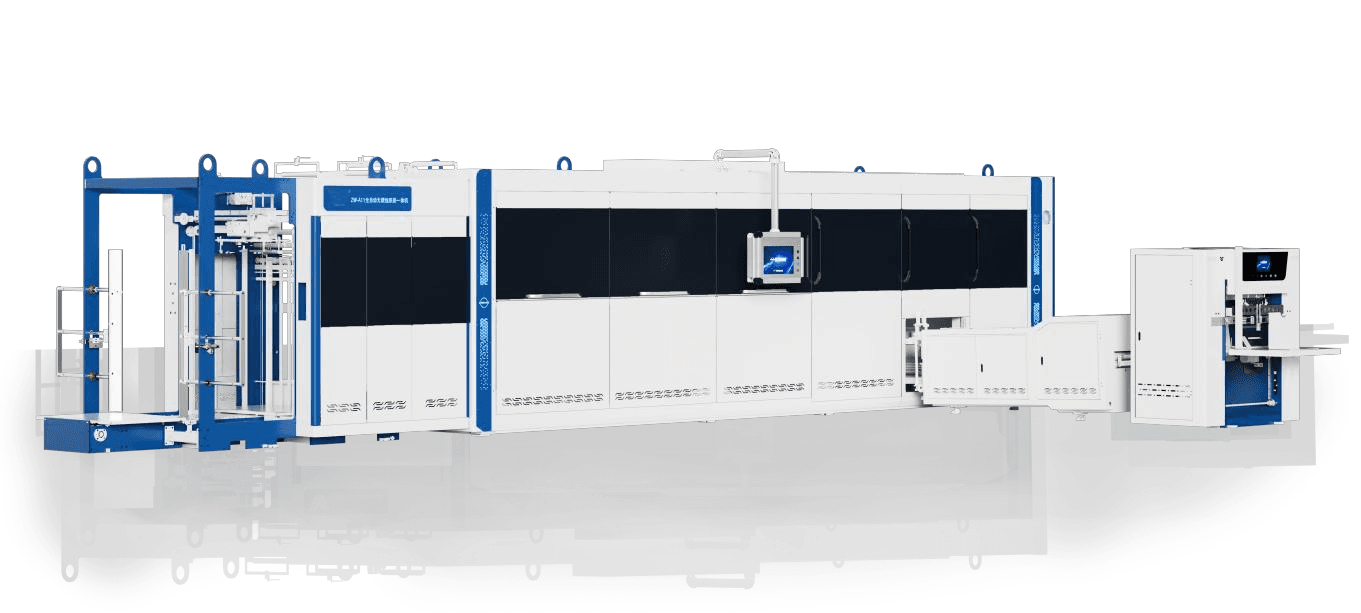
A modern automatic machine takes paper, usually from a roll, and completes the whole bag in one continuous pass: unwinding, optional inline printing, gluing the side seam, forming the tube, folding and pasting the bottom, and delivering finished, counted bags at the end. Higher-end lines add an in-line handle unit that fits twisted, flat or rope handles without a separate manual step. Understanding this flow matters because every buying decision below maps to one stage of it.
Step 1. Match the machine to your bag type
This is the decision that eliminates the most options fastest. Bag geometry and handle style determine which machine class you even need to look at.
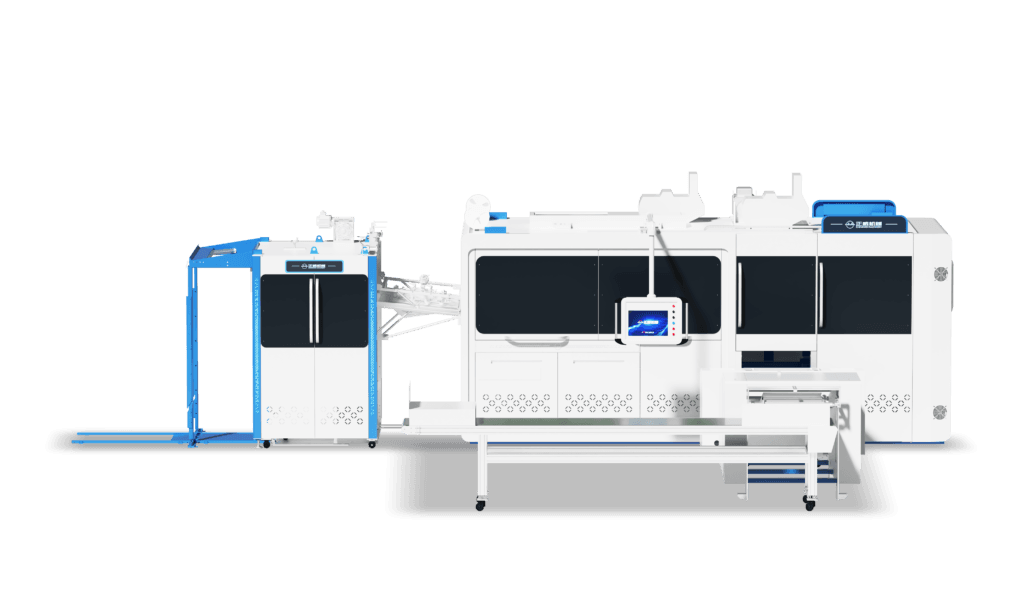
- Square-bottom (block-bottom) bags are the standard for shopping, retail and gift bags. They stand up, hold volume and print beautifully. This is what the ZHENGWEI ZW series is built for.
- Flat and satchel (SOS) bags are common for bakery, food and pharmacy. They come from a different machine family.
- Handle type: twisted paper, flat paper, rope, or no handle at all. If handles matter to your customers, buy a machine with the handle unit integrated rather than bolting on a separate handle machine later. There are three ways a handle gets onto the bag, and only two of them happen on the forming machine.
Decide your primary product first. A machine optimised for premium square-bottom gift bags with handles will serve a retail brand far better than a generalist that does everything adequately and nothing well.
Step 2. Size the machine to your production volume
Speed is where buyers most often over- or under-buy. Rate the machine against your realistic monthly order book, not a peak-day fantasy.
| Class | Typical speed | Best for |
|---|---|---|
| Entry / mechanical | ~35–60 bags/min | Small runs, premium gift bags, frequent size changes |
| Mid servo-driven | ~80–150 bags/min | Growing converters with steady mixed orders |
| High-speed servo | ~150–250+ bags/min | High-volume retail/grocery contracts |
Take your busiest month from the last twelve, divide by 22 working days, then divide by the shift hours you can actually staff. Size the machine to that number. Buyers who size to a single peak week end up paying for a speed class they use a few days a year.
Also weigh roll-fed vs sheet-fed feeding. Roll-fed paper bag machines run faster and cheaper per bag for long, consistent runs. Sheet-fed is more flexible for thick board, pre-printed sheets and short premium runs. Match the feed system to how your orders actually arrive. If you are planning a whole floor rather than a single machine, see how to configure a full line by output target.
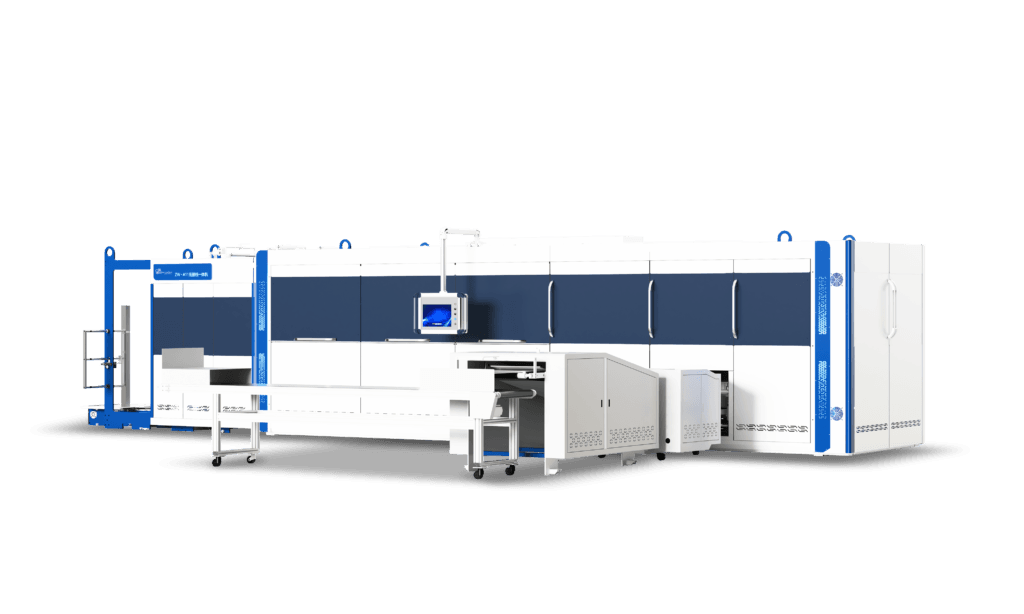
Raw speed isn’t the whole story either. Premium seamless, one-piece-bottom machines deliberately run at a moderate 35–45 bags/min to protect a flawless finish. A slower machine can be exactly right for high-value luxury bags.
Step 3. Check the paper and size range
A paper bag making machine only earns its keep if it runs the materials and sizes your buyers ask for. Before you compare prices, confirm each candidate covers your range:
- Paper weight: most square-bottom machines handle roughly 60–300 gsm, covering kraft, white card and coated stock. Check the lower and upper limits against your lightest and heaviest jobs, and confirm which grammage band your machine can feed.
- Bag dimensions: confirm minimum and maximum width, height and gusset. A narrow range is a hidden constraint on what you can quote.
- Material types: kraft, white cardboard, coated/laminated stock and specialty papers each behave differently through the folder and gluer. It helps to see the bags these machines actually produce before you fix a spec.
Send the supplier your actual board, not a spec sheet, and ask them to run it during the factory acceptance test. Two reels at the same grammage from different mills behave differently through the folder and gluer, and this is where most first-month quality complaints start.
Step 4. Automation, control and inline printing
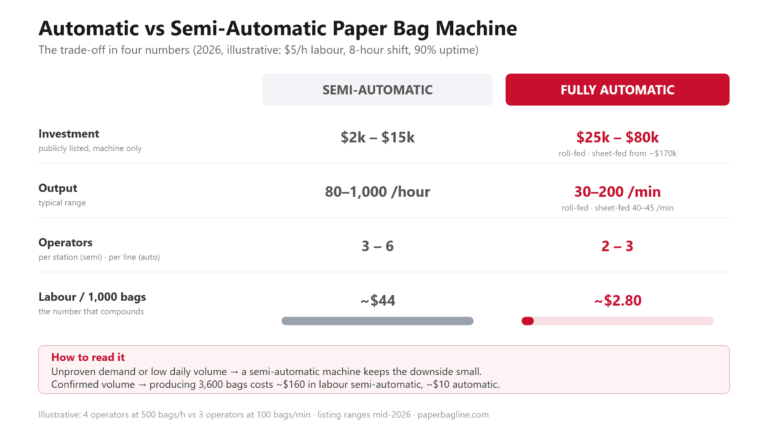
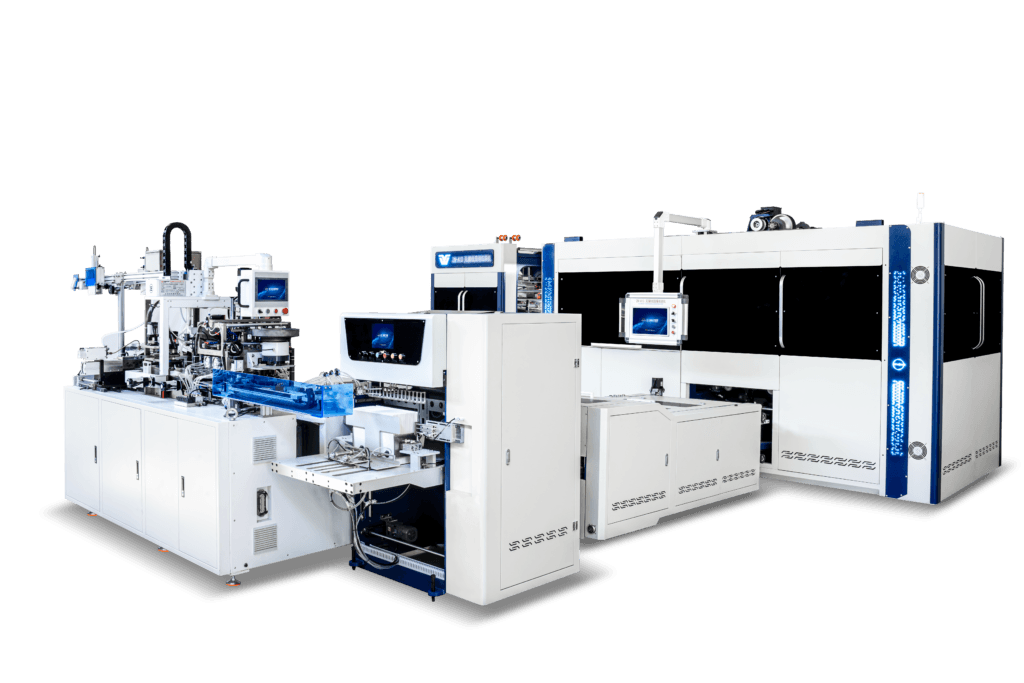
Automation is what turns a machine from a labour cost into a margin engine. We break the numbers down in our automatic paper bag making machine vs semi-automatic comparison. Look for a PLC/servo control system with a clear touchscreen HMI. It stabilises quality, cuts waste on size changes and reduces the skill needed per operator.
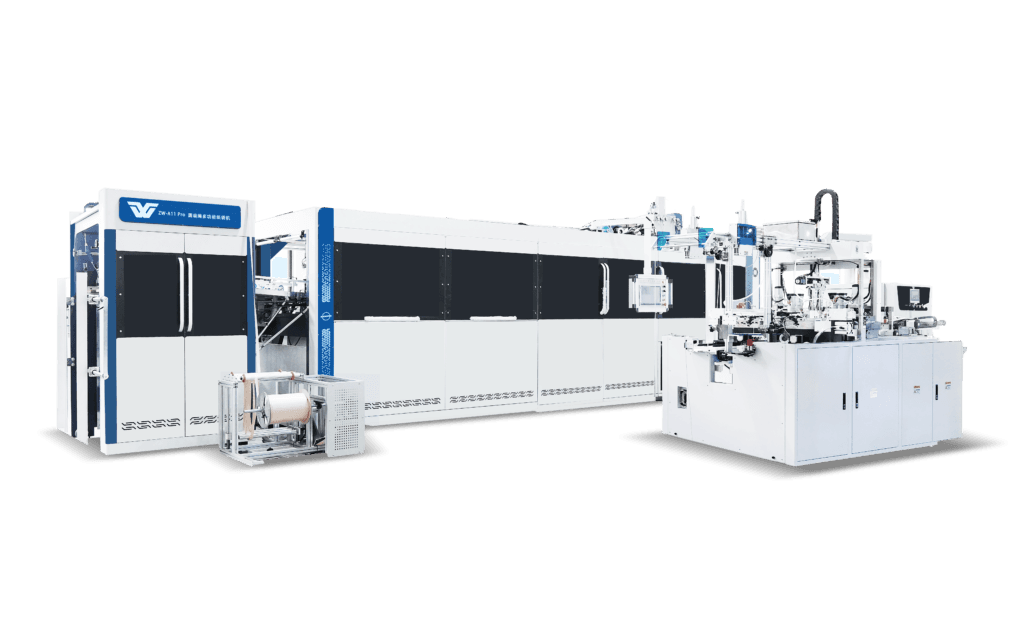
If you print your own bags, an inline flexographic printing unit (typically 1–6 colours) lets you print, form and finish in one pass instead of running a separate press. That single decision can remove an entire production step and its labour. If your customers mostly want plain or externally printed bags, you can skip it and lower the price.
For luxury and premium bags the opposite is often the right call. Producers pre-print sheets on an offset press for a finer finish, then run a sheet-fed machine. That is exactly why seamless luxury lines are sheet-fed rather than roll-fed with inline flexo.
Step 5. Compare on total cost of ownership, not sticker price
A paper bag making machine’s quoted price is only part of the number that matters. Two machines with the same headline price can differ sharply once you add everything you’ll actually pay:
- Installation, commissioning and operator training
- Spare parts availability and lead time (the single biggest driver of downtime cost)
- Power consumption per shift
- Labour per thousand bags (this is where automation pays back)
- After-sales support and remote troubleshooting from the supplier
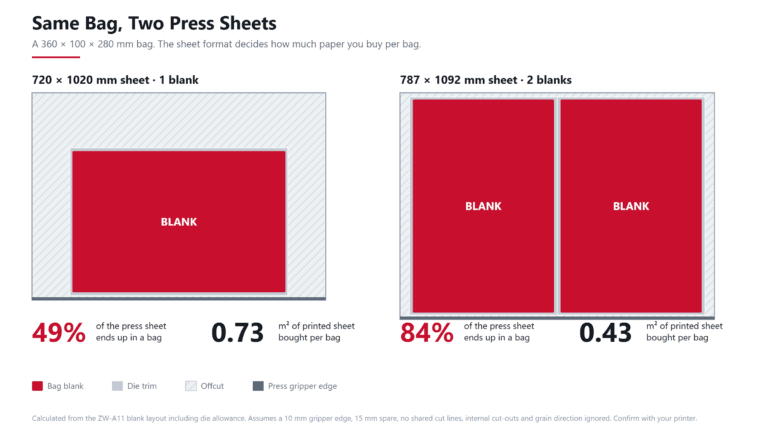
A slightly higher-priced machine with fast spares and responsive support is almost always cheaper over five years than a bargain unit that sits idle waiting for a part. Two of those running costs are published on every spec sheet and almost never compared side by side:
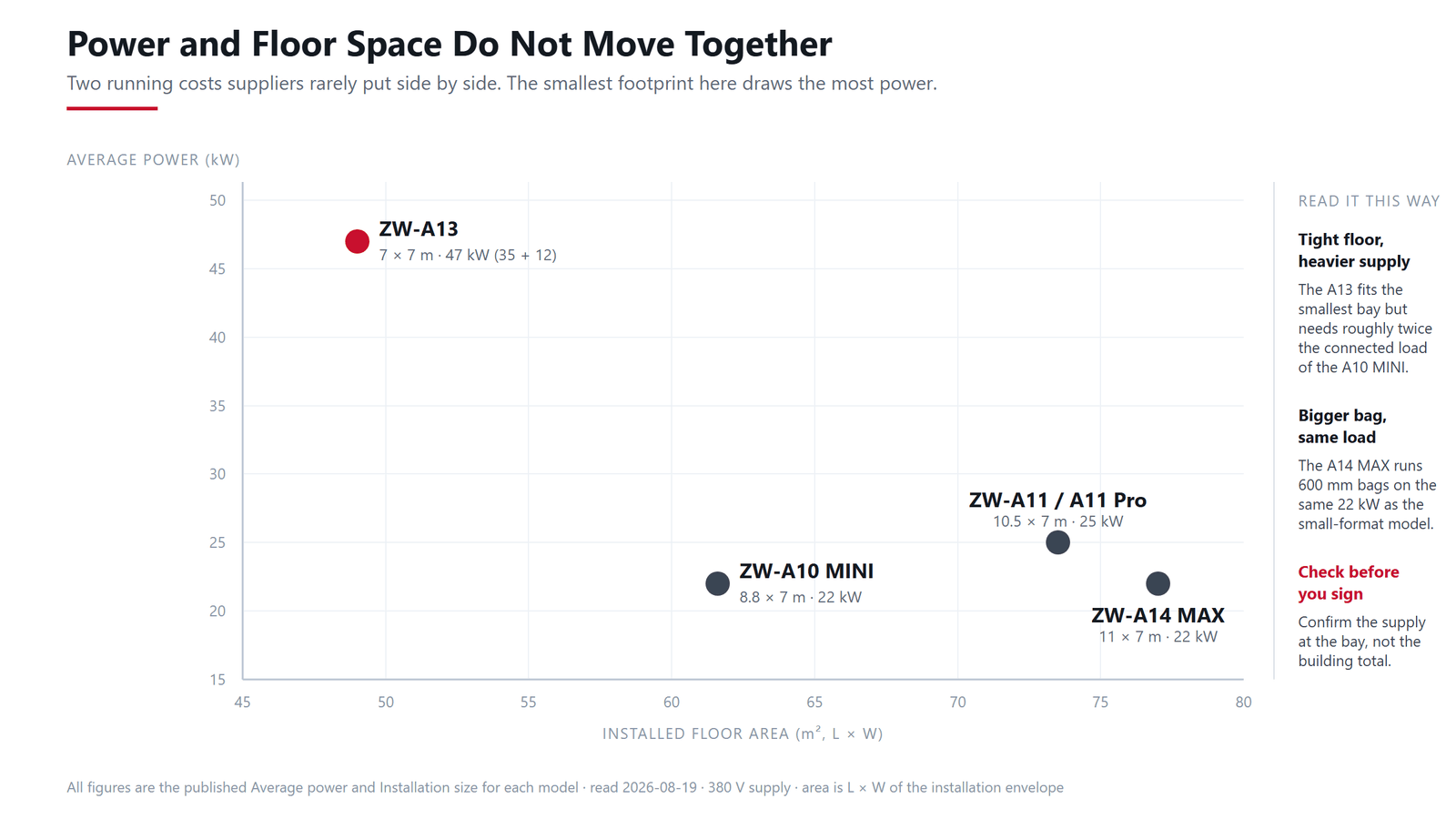
Ask each supplier for the lead time on a wear part you will replace yearly, in writing, before you compare quotes. A 5-day answer and a 45-day answer change the five-year number far more than the difference in sticker price.
How much does a paper bag making machine cost?
Price scales with speed, automation level, handle capability and inline printing. An entry mechanical unit and a high-speed servo line with 4-colour inline printing sit at very different points. Because the right configuration depends on your bag type, volume and printing needs, paper bag machinery is quoted per project rather than sold at a fixed shelf price.
The fastest way to a real number is to tell a supplier your target bag, monthly volume and whether you need handles and printing, and let them spec it. Request a tailored quote here.
Recommended machines: the ZHENGWEI ZW seamless luxury series
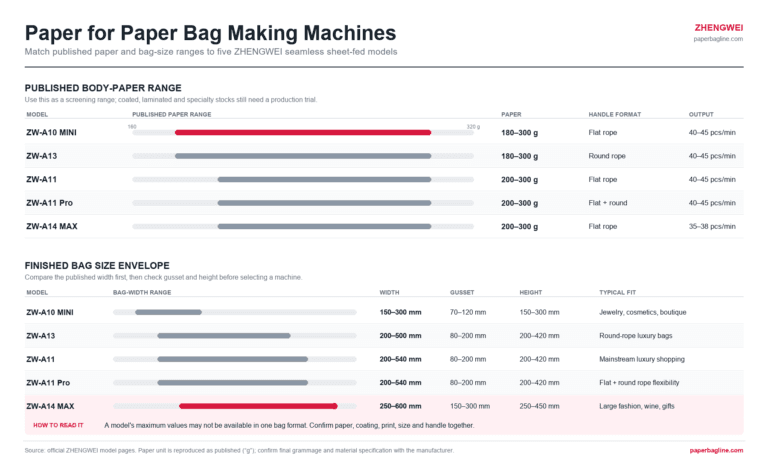
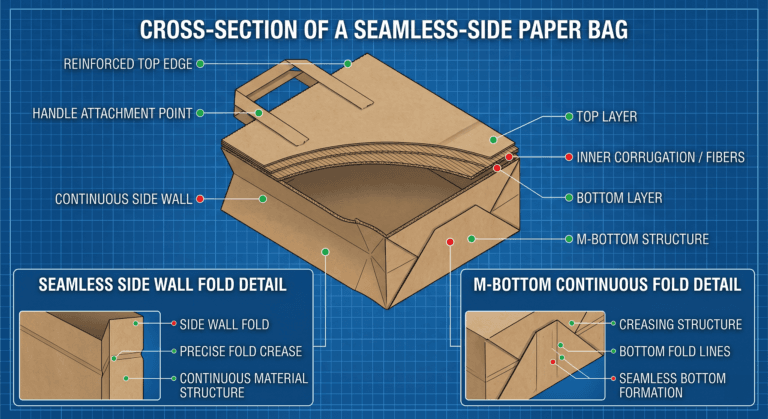
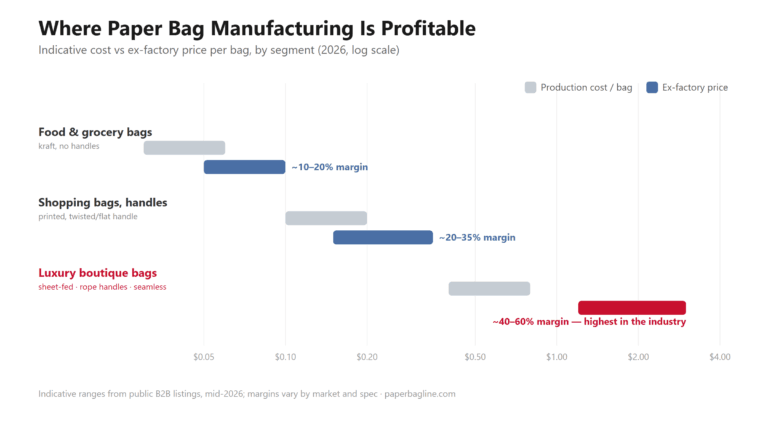
ZHENGWEI builds the world’s first complete line of machines that produce luxury paper bags without a bottom seam. The result is a one-piece-bottom, sheet-fed finish built for premium retail, fashion, cosmetics and gift packaging rather than high-volume plain bags. Five models let you match the machine to your bag format and handle style:
- ZW-A10 MINI is the small-format specialist. It covers 150–300 mm for jewellery, cosmetics and boutique bags.
- ZW-A11 is the best-selling flat-rope flagship at 200–540 mm, and the proven choice for European luxury brands.
- ZW-A11 Pro switches between flat and twisted (round) rope handles on the same machine.
- ZW-A13 is the twisted round-rope specialist, and it fits a 7 × 7 m bay. For handles applied after forming, that job belongs on a separate rope threading machine.
- ZW-A14 MAX is the large-format heavy-duty model for bags up to 600 mm: wine carriers, fashion and oversized gift bags.
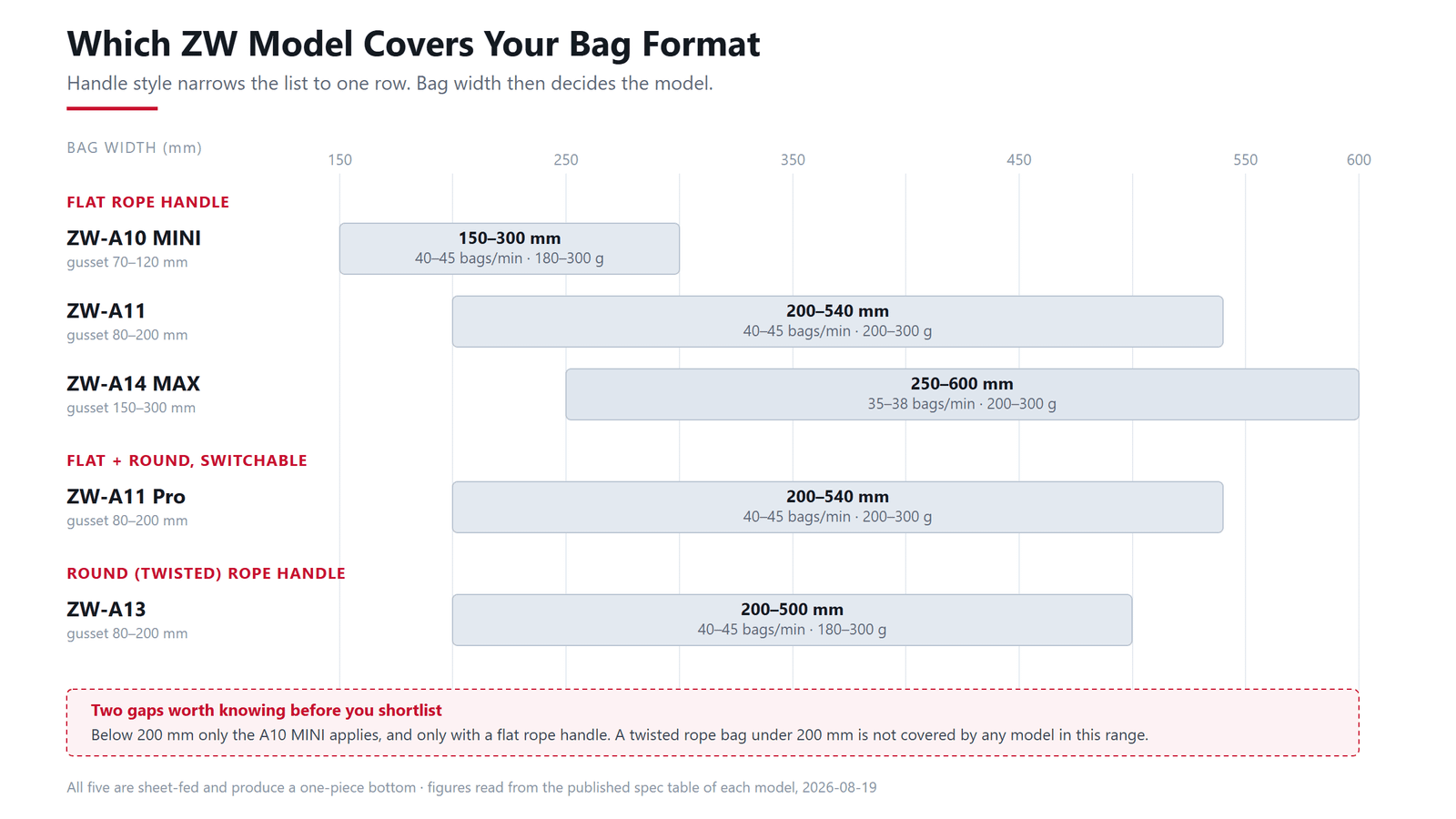
All five are sheet-fed and share the same patented seamless side technology. The A10 MINI and A13 accept 180–300 g board; the A11, A11 Pro and A14 MAX start at 200 g. Four models run 40–45 bags per minute, and the large-format A14 MAX runs 35–38. Compare per-model speed, width, gusset and power across our full range of luxury paper bag machines.
Two things this range does not cover. Every ZW model is sheet-fed, so if your orders are long runs of plain kraft carriers where cost per bag decides the deal, a roll-fed line will beat it and we will say so. And below 200 mm only the A10 MINI applies, with a flat rope handle only: a twisted rope bag narrower than 200 mm is outside what these five machines produce.
Paper bag making machine buying guide FAQ
How to choose a paper bag making machine: where should I start?
Start by fixing your primary bag type, then size the machine’s speed to your realistic monthly volume, confirm the paper and dimension range, decide how much automation and inline printing you need, and compare suppliers on total cost of ownership rather than sticker price. For most shopping, retail and gift bag producers, a fully automatic square-bottom machine with a handle unit, such as the ZHENGWEI ZW series, is the right starting point.
What’s the difference between a square-bottom and a flat-bottom paper bag machine?
Square-bottom (block-bottom) machines make bags that stand upright and hold volume, the format used for shopping, retail and gift bags. Flat/satchel (SOS) machines make the flatter bags common in bakery and food service. They are different machine families, so choose based on your primary bag type.
Roll-fed or sheet-fed: which should I choose?
Roll-fed is faster and cheaper per bag for long, consistent runs. Sheet-fed is more flexible for thick board, pre-printed sheets and short premium runs. Pick the one that matches how your orders arrive.
How fast is an automatic paper bag making machine?
Entry mechanical machines run around 35–60 bags per minute, mid servo machines around 80–150, and high-speed servo lines exceed 150–250+ bags per minute. Size the speed to your realistic monthly volume, not a single peak day.
Can one machine print the bags too?
Yes. Machines with an inline flexographic unit (typically 1–6 colours) print, form and finish in one pass, removing a separate printing step. If you mostly sell plain or externally printed bags, you can skip inline printing and reduce the price.
What paper can these machines use?
Most square-bottom machines handle roughly 60–300 gsm kraft, white card and coated stock. Always confirm the exact weight and size range against your lightest and heaviest jobs before buying.
Get a machine spec’d for your bags
Tell us your target bag, monthly volume, handle and printing needs, and we’ll recommend the right ZW model and send a tailored quote.
Request a Quote