Paper for Paper Bag Making Machines: 7 Key Checks
Materials guide · ZHENGWEI Machinery
A practical guide to choosing paper that looks right, folds cleanly and works with your production line.
Start with the Bag, Before You Choose the Paper
A sheet can look excellent on the print table and behave poorly once it reaches the folding station. Selecting paper for paper bag making machines therefore needs input from the designer, printer and converter. Each sees a different part of the same job.
Begin with the product the bag will carry. Record its weight, shape and any sharp edges, then specify bag dimensions, handle construction and the expected carrying conditions. A compact cosmetics bag and a wide fashion carrier may use similar artwork but place different demands on their paper.
Next, decide what the customer should notice: a natural texture, a crisp printed image, a soft surface or a rigid shape. Turn those preferences into sample requirements. “Premium paper” is too vague to help a production team choose between two stocks.
Paper for Paper Bag Making Machines: GSM and Thickness
GSM means grams per square metre. It describes the mass of paper over a given area, rather than its thickness. A 200 GSM sheet weighs 200 grams per square metre, but that number alone does not tell you how it will fold or how much a finished bag can carry.
Caliper describes thickness. Stiffness describes resistance to bending. Papers with the same GSM can differ in both because their fibre composition, coating and manufacturing treatment differ. Request these properties from the paper supplier instead of treating grammage as a complete specification.
A sheet fed paper bag machine also has its own material window. Confirm the permitted grammage, sheet dimensions and finish with the machine supplier. Increasing paper weight may improve the feel of a bag, yet create feeding or folding difficulties if the stock falls outside that window.
For an initial comparison, collect samples of two or three suitable grades. Compare their appearance and converting performance at the same bag dimensions. This gives you a more useful answer than choosing the heaviest paper available.
Kraft, Coated Paper or Specialty Stock?
When choosing paper for paper bag making machines, these materials offer different starting points for luxury production. Each needs to be checked against the intended finish and machine configuration.
| Material | Design appeal | Production check |
|---|---|---|
| Natural or white kraft | Visible paper character; natural or clean presentation | Print appearance, surface consistency and finished bag strength |
| Coated art paper | Smooth surface for detailed graphics | Crease appearance and adhesion on the finished surface |
| Textured specialty paper | Distinctive colour, texture or tactile finish | Feeding, scoring and adhesive contact on uneven surfaces |
For kraft, judge the printed sample rather than the unprinted sheet alone. The paper shade becomes part of the design, especially where ink coverage is light. Check whether brand colours remain acceptable under the lighting used for approval.
Coated paper can suit artwork with fine detail, but inspect folds through dark printed areas carefully. A pale line along a crease may be much more noticeable against a dark background than against white paper.
Specialty stock deserves an early trial. A texture that feels attractive in the hand may affect how consistently the feeder separates sheets or how the glue contacts a joining area.
How Paper Selection Connects to ZHENGWEI Equipment
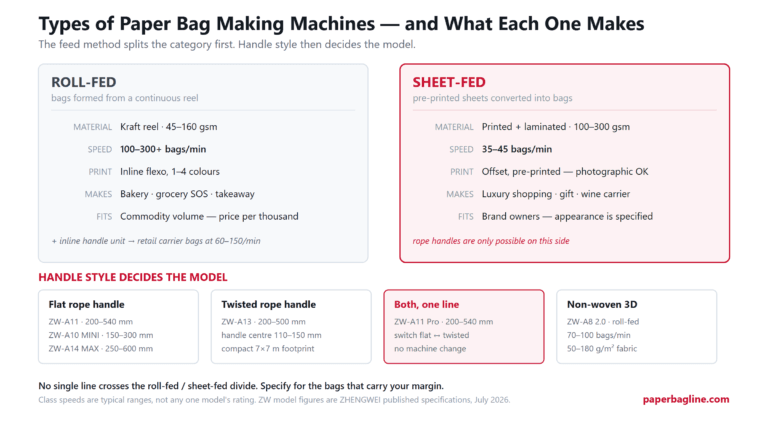
A material specification becomes more useful when it is checked against an actual machine. The comparison below brings together the published paper ranges, handle formats, output and finished bag-size ranges of five ZHENGWEI sheet fed models.
Use the chart as an initial screening guide. A machine’s maximum width, gusset and height may not be available in one bag format. Confirm the complete bag dimensions, paper finish and handle construction before approving a machine configuration.
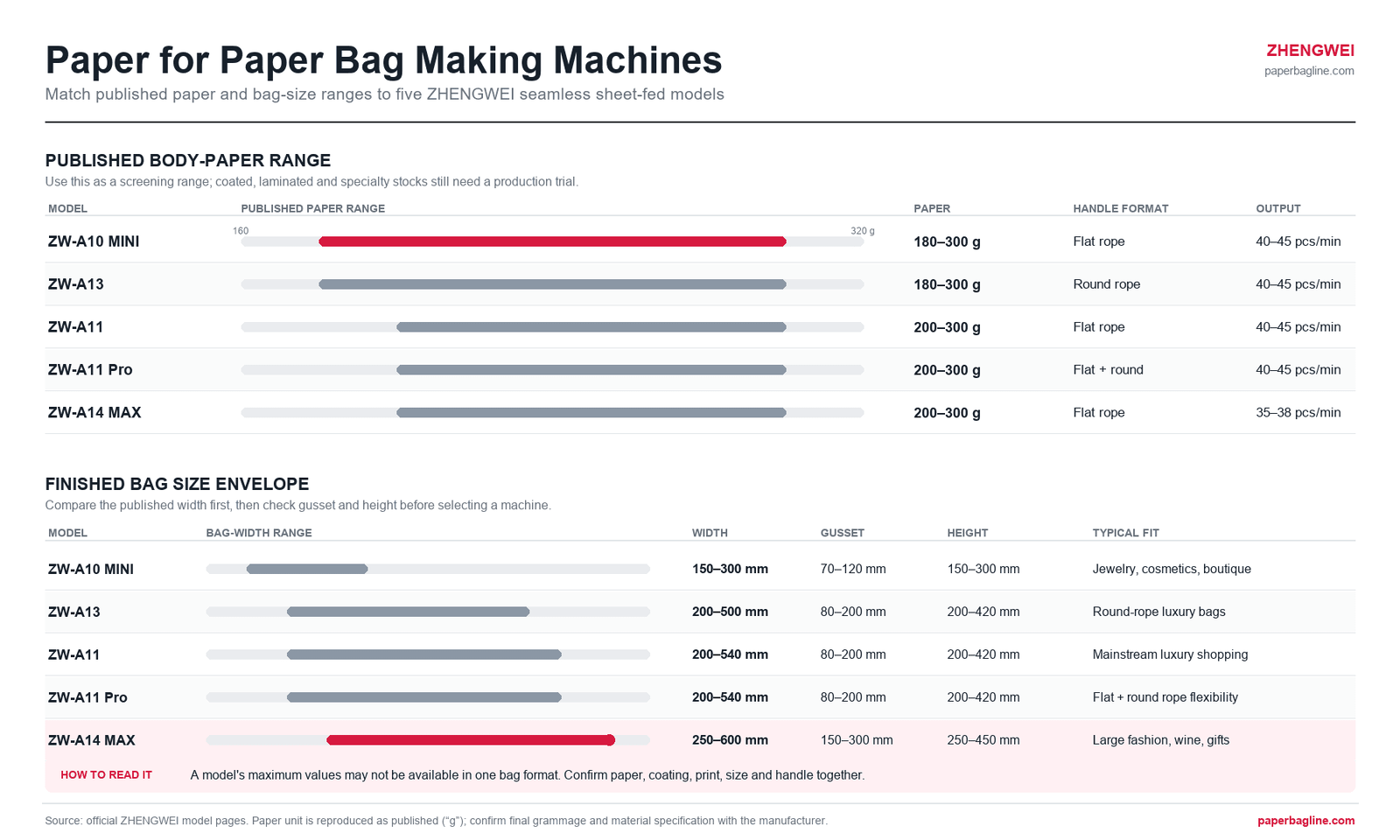
The detailed examples below focus on two practical starting points: the ZW-A11 for wider flat-handle carriers and the ZW-A10 MINI for smaller luxury formats.
ZW-A11: Check the Sheet and the Handle Reinforcement
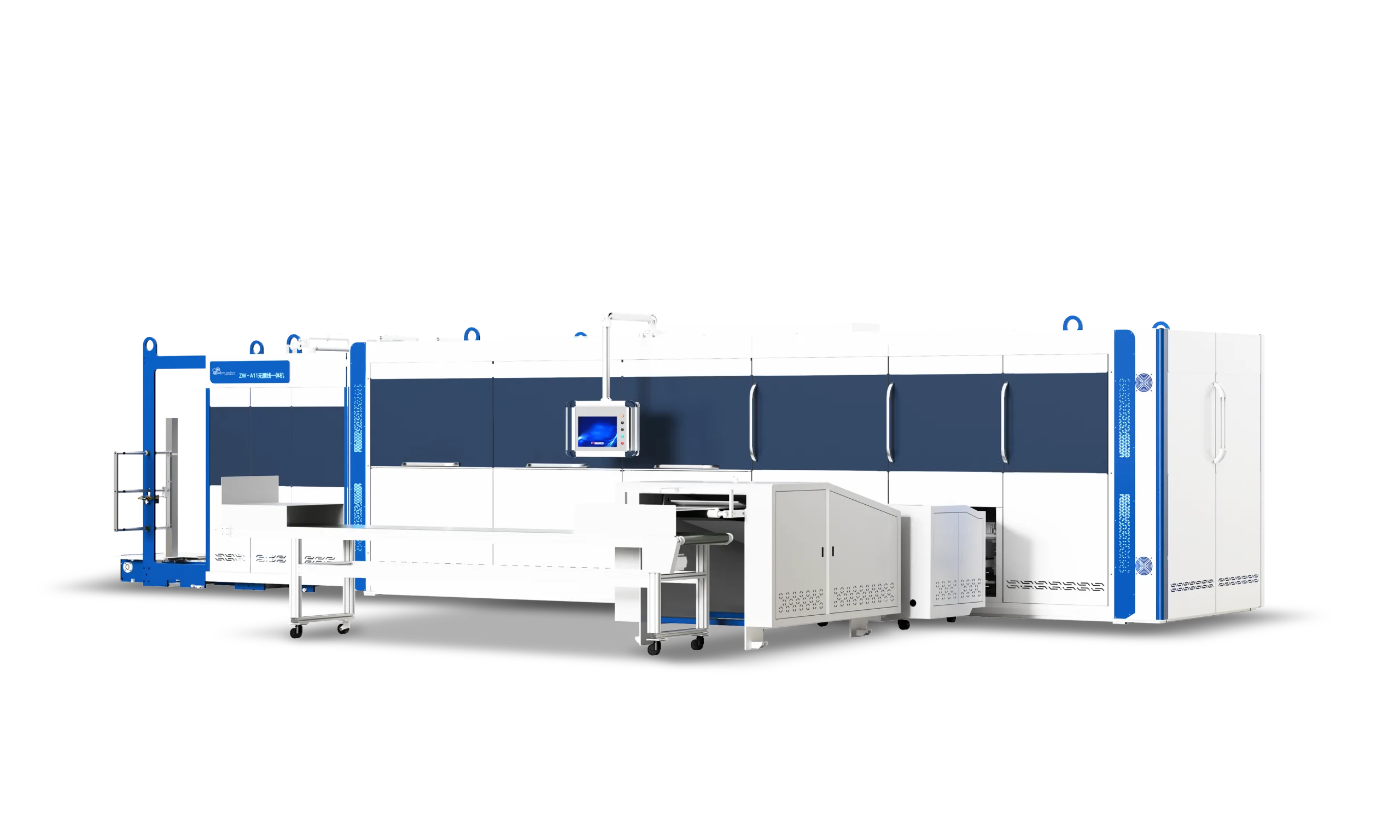
The ZW-A11 flat handle paper bag machine has a published bag width range of 200–540 mm. Its sheet length range is 560–1040 mm, with sheet widths of 310–680 mm. These dimensions help the printer and converter assess the blank before purchasing stock.
The bag body and reinforcing mouth patch are separate materials in this process. Include both in the trial specification, together with the intended flat rope handle. A body sheet that folds cleanly does not establish that the handle anchoring area will perform as required.
ZW-A10 MINI: Assess the Smaller Format
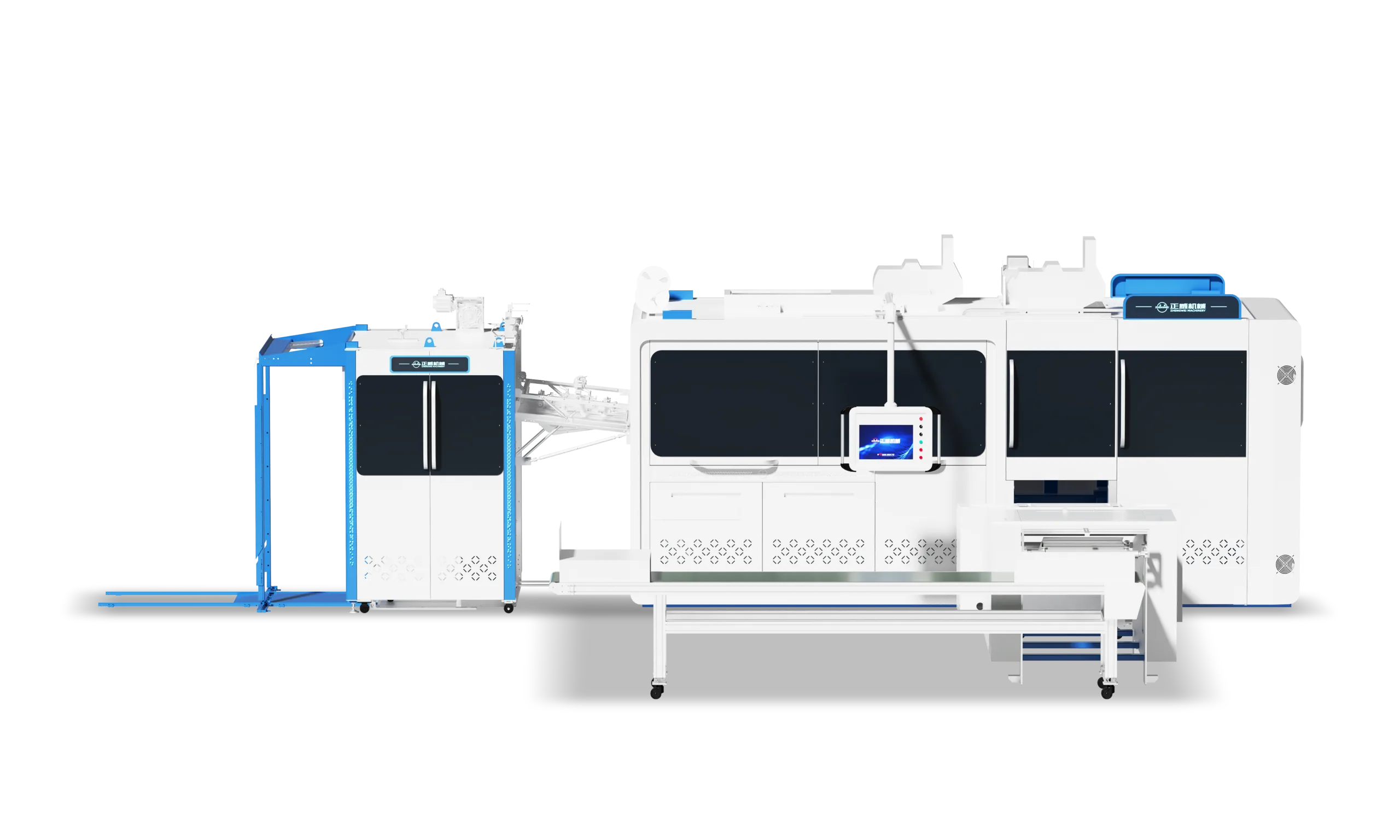
The ZW-A10 MINI small paper bag making machine covers published bag widths of 150–300 mm, gussets of 70–120 mm and heights of 150–300 mm. It is a relevant model to examine for compact cosmetics, jewellery and boutique packaging.
Confirm the complete width, gusset and height combination rather than checking each limit independently. Then trial the finished paper and surface treatment on that format. Small bags still need consistent folds, secure joining areas and correctly positioned handles.
For either model, provide a finished paper sample, bag drawing and intended load when requesting a material review. Use the full machine comparison to establish the format, then use the trial to establish the material.
Grain Direction Belongs on the Drawing
Paper fibres have a predominant direction, commonly called the grain. Folding behaviour changes with that direction. On heavier printed stock, grain orientation and crease preparation can influence whether a fold remains clean or shows cracking.
Ask the printer to mark grain direction on the sheet layout and the converter to identify the most demanding folds. A bag has several folds, so there may be a compromise rather than one perfect orientation. Resolve that compromise using samples, not assumptions.
Rotating a blank to fit another bag on a press sheet can change its grain relationship. Before accepting the apparent material saving, check the effect on the finished folds. Our guide to paper bag blank size and sheet layout explains the layout side of that decision.
Test Finishes and Glue as One System
Lamination, varnish and foil change the surface that reaches the paper bag machine. Do not approve the base paper and assume that every decorative version will run identically.
Give the converter a finished sample showing the actual treatment, including the joining areas. Agree where glue will be applied and whether those areas need a different surface preparation. Adhesive selection should follow the paper, coating and production conditions.
Use the adhesive supplier’s instructions for application and curing. Inspect joints after the agreed curing period and after realistic storage. A bag that looks secure immediately after forming is only the beginning of the assessment.
Keep Paper Condition Consistent
Paper responds to its surroundings. Stock arriving from a cold warehouse may need time to acclimatise before processing. Open packaging only when necessary, protect unused sheets and avoid damp storage locations.
If feeding or fold quality changes between batches, record the paper grade, batch identification and workshop conditions before adjusting the machine. A consistent record helps distinguish a material change from a setting change.
Sappi’s paper conditioning and storage guidance provides further background. Follow the relevant supplier recommendations for your particular stock.
Write a Specification Purchasing Can Repeat
An approved bag sample needs a matching written paper specification. Include the mill or supplier grade, agreed tolerances, grain direction and surface treatment. Keep batch references with the production record so a later quality issue can be traced to the stock used.
When purchasing proposes an equivalent grade, compare more than its GSM and price. Ask for samples and repeat the relevant forming and joint checks. A substitute may be suitable, but approval should come from its performance on the job rather than its description on a quotation.
Testing Paper for Paper Bag Making Machines
Run the proposed paper with the actual artwork, finishing and bag construction. If those elements are missing, the trial may prove that the machine can fold plain paper without proving that it can produce the customer’s bag.
- Confirm the specification. Record grade, GSM, caliper, grain, dimensions, finish and adhesive.
- Observe feeding and forming. Note interruptions, sheet marking, fold consistency and visible cracking.
- Inspect the complete bag. Check dimensions, joining areas, handle attachment and overall presentation.
- Test its intended use. Assess the agreed load and handling conditions after the joints have cured.
- Record saleable output. Separate accepted bags from rejects and note the reasons for rejection.
Keep approved samples and the settings used to make them. Those references help purchasing and production recognise changes when a replacement paper batch arrives.
Compare Cost per Accepted Bag
A cheaper sheet does not necessarily produce a cheaper bag. Include paper usage, printing, finishing, setup waste, rejected bags and additional handling when comparing alternatives.
For illustration, a lower priced stock that needs more sorting or creates more rejected folds may lose its apparent saving. Conversely, a lighter compatible grade may meet the brief without the cost of unnecessary extra material. Establish that through testing.
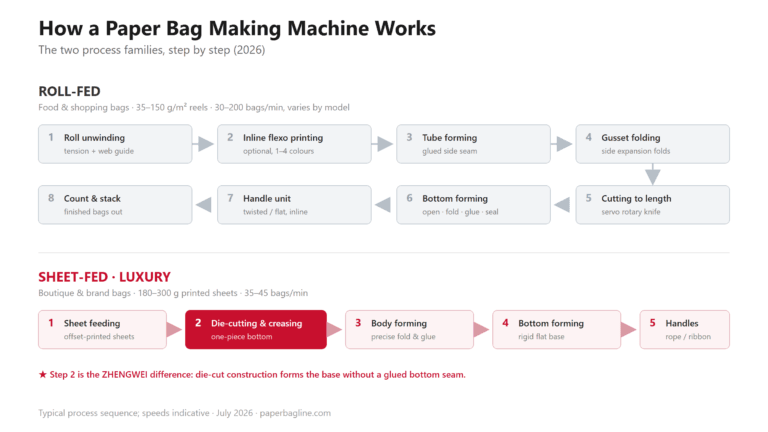
To connect the material decision with equipment, compare our luxury paper bag machine range and read how sheet fed and roll fed machines work . The aim is a repeatable match between paper, finish and bag construction.
7 Checks When Choosing Paper for Paper Bag Making Machines
Before approving paper for paper bag making machines, work through these seven checks with your printer and converter. Keep the results alongside an approved finished bag sample so purchasing and production can refer to the same specification.
- GSM: Confirm the paper’s grammage and the material range permitted for the selected machine.
- Thickness: Check caliper separately from GSM, particularly when comparing alternative paper grades.
- Stiffness: Assess whether the paper provides the intended bag shape without making folding unnecessarily difficult.
- Grain direction: Mark the grain on the sheet layout and inspect the most demanding folds on the finished bag.
- Surface finish: Trial the actual printing, lamination, varnish or other treatment specified for the order.
- Adhesive compatibility: Evaluate the joining areas and handle reinforcement after the agreed curing period.
- Production performance: Record feeding consistency, accepted output, rejected bags and the reasons for rejection.
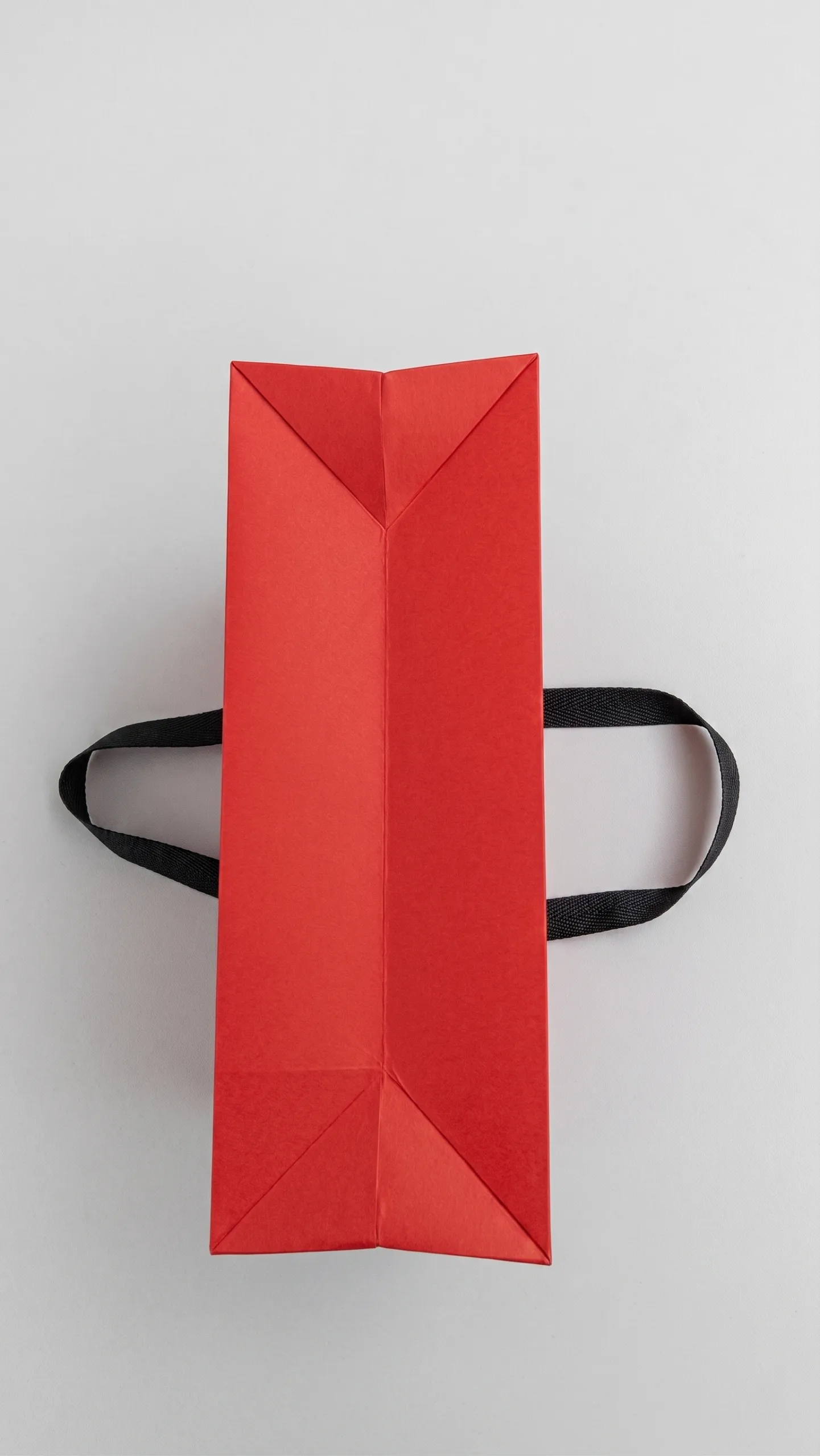
The final decision on paper for paper bag making machines should combine appearance, carrying performance and repeatable production. Retain the approved sample and written specification for future orders.
Questions and Answers
What Is the Best Paper for Paper Bag Making Machines?
The best paper for paper bag making machines meets the bag’s appearance and carrying requirements while staying within the machine’s material limits. Kraft, coated and specialty papers can serve different briefs. Confirm suitability with the actual finished stock.
Does Higher GSM Always Mean a Stronger Paper Bag?
No. Fibre properties, construction, folds, adhesive joints and handles also affect performance. GSM is useful for comparing paper grades, but it cannot establish a finished bag’s carrying capacity by itself.
Can Laminated Paper Run on a Sheet Fed Machine?
It depends on the machine, film, paper and adhesive combination. Check the supplier’s permitted materials and trial the laminated version, including its glue areas, before scheduling production.
Why Do Dark Printed Folds Sometimes Show White Lines?
Cracking at a fold can expose lighter material beneath the printed surface. Examine grain direction, creasing, paper condition and finish together. Changing one setting without checking the stock may leave the cause unresolved.
What Should I Send for a Compatibility Review?
Provide finished bag dimensions, intended load, handle type, paper specification, grain direction and a printed sample with all surface treatments. Include the planned order quantity and agreed quality criteria.
Should I Choose the ZW-A11 or ZW-A10 MINI?
Start with bag dimensions and handle requirements. The ZW-A11 covers published bag widths of 200–540 mm, while the ZW-A10 MINI covers 150–300 mm. Confirm the complete format and trial the finished paper before selecting a model.